Lyon
A Moveable FeastLyon is the setting for the interrupted road trip Ernest Hemingway expects to make with F. Scott Fitzgerald: a city reached alone after a missed train, where waiting brings an encounter with a fire-eater and the promised car proves to be in poor condition. The account makes Lyon more than a stop on a route back to Paris. Its hotels, cafés, food, and garage turn the journey into a test of expectation against circumstance, while Hemingway’s attention to people met along the way gives the delay its own narrative life.
The planned journey
F. Scott Fitzgerald asks Hemingway to travel by train to Lyon, collect a small Renault that Fitzgerald and Zelda Fitzgerald had abandoned there after bad weather halted their drive, and bring it back to Paris. The invitation seems newly reassuring to Hemingway. At the Closerie des Lilas, Fitzgerald had appeared charming and reasonable after drinking two whiskies without the marked change Hemingway had watched for; the earlier unpleasant encounter at the Dingo Bar consequently seemed less conclusive. Hemingway imagines a pleasant late-spring drive through the countryside and values the prospect of talking with an older, successful writer, although at this point he has not read The Great Gatsby and does not yet regard Fitzgerald as a serious writer.
The practical arrangements reflect the couple’s narrow means. Hemingway and Hadley Richardson are living economically, saving for travel to Spain, while his writing brings in money through an advance from Boni and Liveright and sales to European and Paris publications. Hadley approves of the trip as a rest from work, though she does not rate Fitzgerald’s writing as highly as Henry James. The couple would rather make the journey in their own car, but cannot afford one. Hemingway has also insisted that the men split the hotel and meal costs, despite accepting an invitation initially understood as Fitzgerald’s trip. That unease about who pays will shape his decisions once the plan begins to fail.
Arrival without Fitzgerald
Hemingway reaches the Gare de Lyon in good time and waits outside the gates while Fitzgerald, who is supposed to bring the tickets, does not appear. As departure approaches, Hemingway buys an entry ticket, walks along the train looking for him, then boards the long express hoping he may be aboard. He is not. Hemingway buys a second-class ticket, since there is no third class, and asks the conductor for Lyon’s best hotel. From Dijon he wires the hotel address to Fitzgerald, knowing the message will not reach him before he leaves and hoping Fitzgerald’s wife will forward it.
The missed train first provokes Hemingway’s quick temper, but the anger eases before the train has gone far. He watches the countryside, eats lunch in the dining car, and drinks a bottle of St.-Émilion. He also turns the episode into a lesson: he had rarely accepted a journey paid for by someone else, and had tried to make this arrangement feel fair by sharing the expenses. Now he is spending money earmarked for Spain without knowing whether Fitzgerald will arrive at all. The trip thus begins with a reversal: what Hemingway had pictured as an opportunity to learn from a writer becomes an exercise in patience, uncertainty, and managing his own embarrassment at having accepted the invitation.
Waiting in the city
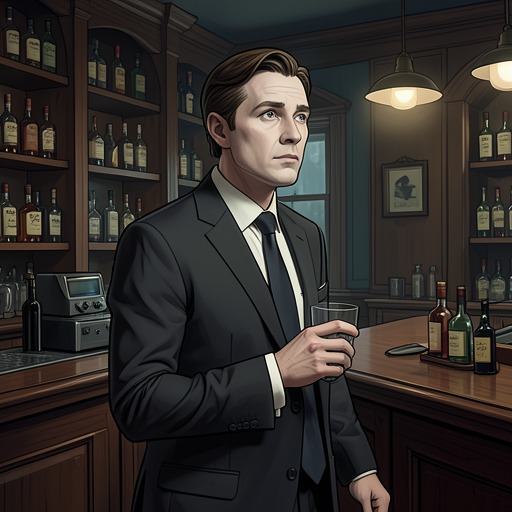
In Lyon, Hemingway learns that Fitzgerald has left Paris but has given no word about where he is staying. Hemingway confirms his own hotel address, calls the named hotels, and leaves messages, without finding him. The city’s solid, moneyed character strikes him as likely to suit people who have money and like that kind of place; it is not, in his first impression, a cheerful town after dark. He has heard of Lyon’s celebrated chicken, but the meal he recalls is excellent mutton instead. The contrast between its reputation and the food actually eaten is characteristic of this account: the city is encountered through particulars, not through a visitor’s guidebook expectations.
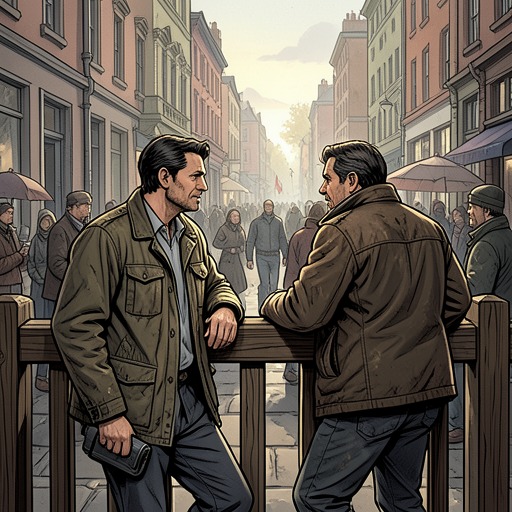
While waiting, Hemingway goes to a café for an apéritif and the newspapers. There he meets a professional fire-eater who also bends coins with his jaws and fingers. The man says there is little money in either skill in Lyon, blaming false fire-eaters for damaging the trade. He has been performing all evening but cannot afford supper. Hemingway offers him a drink, then shares a cheap dinner with him at an Algerian restaurant. The encounter opens a different route through the city: while the expected companion is absent, a stranger’s precarious livelihood becomes the evening’s central human contact.
Over dinner, the fire-eater asks how Hemingway earns a living. On learning that he is starting as a writer of stories, he offers to tell him sensational material in exchange for a share of any money it earns. He further proposes that they travel together to North Africa, where he claims he can take Hemingway to the country of the Blue Sultan for unheard-of stories. Hemingway listens, pays for the meal, and leaves to check again for Fitzgerald. The offer is not taken up in the account, but it briefly makes Lyon a place of unrealized literary possibilities as well as frustrating logistics. The fire-eater’s bent coins, sore gums, and uncertain trade stand in sharp contrast to the successful writer Hemingway had expected to accompany him.
The car and the journey’s turn
With no word from Fitzgerald that night, Hemingway goes to bed in an unfamiliar luxury: he has not stayed in a large hotel for three years. He opens the windows, settles against the pillows, and reads the first volume of Turgenev’s A Sportsman’s Sketches, borrowed from Sylvia Beach’s library, until he falls asleep. In the morning, a call from the desk announces a visitor, but Fitzgerald does not come up; Hemingway meets him downstairs. The delay has made the hotel, rather than the road, the first shared space of the trip.
At the garage, Hemingway finds that the Renault has no top. The top had been damaged during or after its unloading in Marseilles, and Zelda Fitzgerald had ordered it cut away and refused to replace it because she disliked car tops. Fitzgerald and Zelda had driven as far as Lyon before rain stopped them. The car is otherwise in fair condition, but the garage man explains that it needs new piston rings and appears to have been driven without enough oil and water; overheating has burned the paint from the motor. Fitzgerald disputes some charges for washing, greasing, and oil before paying the bill. The details make the abandoned car a record of the earlier journey’s mishaps, not simply a vehicle waiting to carry the writers back to Paris.
Lyon’s narrative significance lies in this accumulation of failed expectations and incidental encounters. Hemingway arrives expecting company, conversation, and a country drive; instead he travels alone, spends money he had set aside for Spain, searches hotels, shares dinner with a struggling performer, and inspects a car damaged by both weather and inadequate maintenance. The city is rendered through these practical negotiations—where to sleep, whom to find, what to eat, and what the car will require—while its brief openings toward adventure remain contingent. The planned return drive matters, but the episode’s most vivid movement is the detour imposed by waiting.